Washington Interventional Psychiatry (WIP) is a network of independently owned psychiatry practices that share a common approach to care. WIP-DC has served patients in Washington, DC, since 2017 from Spring Valley, near Tenleytown. WIP-Rockville brings the same psychiatrist-led approach to Montgomery County, Maryland.
WIP is built so that each practice stays local and physician-owned. Psychiatrists who own their practice are invested in it for the long term, so patients can build lasting relationships with the same doctor, and each practice can build lasting relationships with the therapists, physicians, and families in its own community. Every treatment decision stays with the patient’s own psychiatrist and practice.
The WIP practices are independently owned and operated affiliates. Each is a separate medical practice under its own ownership.
A dedicated psychiatrist follows your care over time and can use every tool we offer, from medication management to Spravato, IV ketamine, TMS, and SGB.
Medication, interventional treatment, and therapy are coordinated in a single plan, adjusted as you respond.
Many of our patients have been with us for years, some since we opened in 2017.
Each practice treats the conditions psychiatrists treat. Board-certified psychiatrists diagnose, build the treatment plan, and follow patients over time.
Interventional treatments are offered alongside medication management, not in place of it. They are used for depression, including bipolar depression, and for PTSD, OCD, and other conditions where the evidence supports them.
Most people we see live with more than one condition: depression with PTSD, anxiety, OCD, ADHD, or substance use. Because every interventional treatment, medication management, and addiction and child psychiatry are offered at both WIP-DC and WIP-Rockville, our psychiatrists treat those conditions together, combining approaches such as SGB with IV ketamine, IV ketamine with TMS, or KAP paired with EMDR, rather than one diagnosis at a time.
There is no single pathway through a WIP practice. Patients arrive in different ways, with different histories, and the right structure for their care varies.
A patient with an established psychiatrist they value should not have to leave that relationship to access interventional care. We structure care around the patient’s existing clinical relationships, not around our own. Information for referring clinicians.
Psychiatrists across the WIP practices meet every week to review interventional cases. It is a practice borrowed from academic medicine, and one most private psychiatric practices do not have.
Cases are presented when they warrant additional clinical input: complex presentations, unclear candidacy, prior treatment failures, atypical responses, or decisions about sequencing and modification. The treating psychiatrist presents the case and the group works through it together, while the treatment decision stays with the patient’s own psychiatrist.
Residency programs and hospital services run case conferences as a matter of course. We do it because interventional treatments warrant additional clinical scrutiny: they are more involved than oral medication, are often pursued after standard treatments have not worked, and benefit from being thought through by more than one psychiatrist. The conference also serves as ongoing peer learning, where new evidence and lessons from prior cases are discussed.
Inside WIP-DC and WIP-Rockville


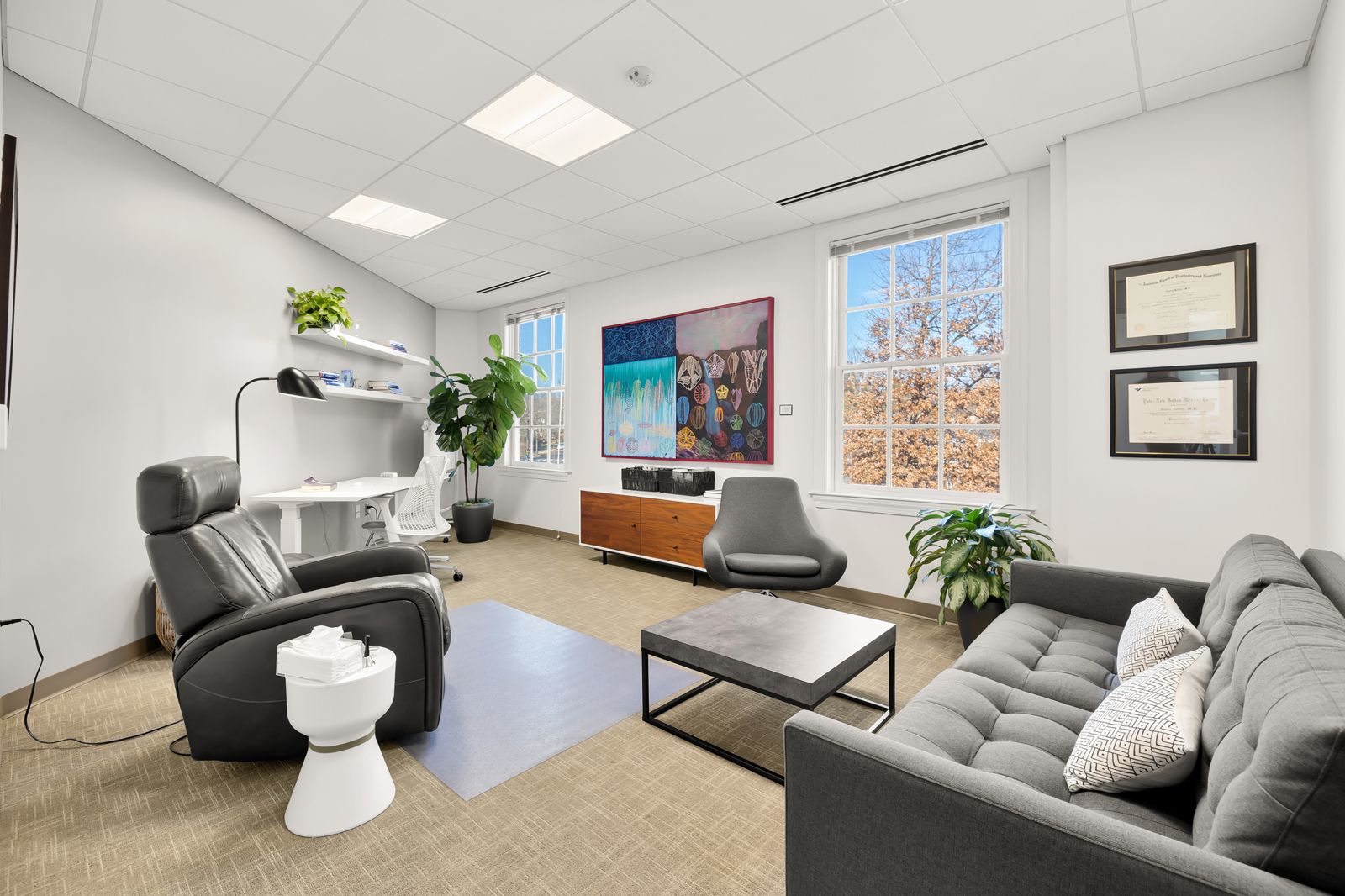
The team structure is intentional. Patients see their clinician for clinical decisions, work with the same nursing team during interventional treatments, and reach their clinician’s assistant when they need scheduling or refills handled. The clinical relationship stays with the provider; the operational work happens around it.
Psychiatrists at the WIP practices are board-certified by the American Board of Psychiatry and Neurology and trained at institutions including Yale, Cornell, Columbia, and Mount Sinai. Specialties include adult, child and adolescent, addiction, and forensic psychiatry.
Nursing staff play a central role in interventional and on-site psychiatric care. They are trained in clinical monitoring, medication administration, and patient safety protocols, and they administer and monitor treatments such as Spravato, ketamine, and TMS under the oversight of each practice’s physicians.
WIP practices work with licensed therapists and professional counselors who provide evidence-based psychotherapy. Therapists collaborate closely with each practice’s psychiatrists and, when appropriate, participate in ketamine-assisted psychotherapy (KAP) within a structured medical framework, so psychotherapy, medication management, and interventional treatment are coordinated under consistent psychiatric oversight.
Each psychiatrist and nurse practitioner is paired with a dedicated assistant trained in healthcare administration, nursing support, and insurance coordination. The assistant handles communication, medication refills, scheduling, insurance coordination, and documentation, so responses are timely and clinicians can focus on clinical decisions and direct patient care.
WIP-DC is a clinical training site for Georgetown University Department of Psychiatry residents, who rotate through WIP as part of their training in interventional psychiatry and neuromodulation. The relationship shapes how we practice in concrete ways.
Our clinical protocols are documented to a standard that can be taught. Treatment decisions are made within frameworks residents can learn and replicate, and outcomes are tracked and reviewed. Teaching keeps our work rigorous: every protocol has to hold up to a resident’s questions.
Patients complete validated symptom inventories, such as the PHQ-9 for depression and the GAD-7 for anxiety, at intervals during treatment. The data informs clinical decisions throughout.
Among patients who participated in outcome tracking. Individual results vary based on diagnosis, severity, and treatment course. Outcomes data does not replace clinical judgment; it informs it.
One clinician directs the care. Interventional treatments are tools within that care, applied when indicated and adjusted over time. The clinical standard is documented, taught, and applied to every patient. That is how we practice.