Transcranial magnetic stimulation (TMS) is a non-invasive, non-medication treatment that uses targeted magnetic pulses to stimulate brain circuits involved in mood and obsessive-compulsive symptoms. It is FDA-cleared for major depressive disorder and for OCD.
WIP offers standard daily TMS and accelerated TMS at both WIP-DC and WIP-Rockville, for people who haven’t improved enough with antidepressants or psychotherapy. Every course is planned and followed by a board-certified psychiatrist.
Prefer to text? (202) 875-6656 · weekdays
Research suggests TMS tends to work best when it’s started earlier rather than after many failed medications. Read what to do after two antidepressants haven’t worked.
Cost and insurance: See all prices, in-network coverage, and out-of-network reimbursement on our Insurance & Fees page.
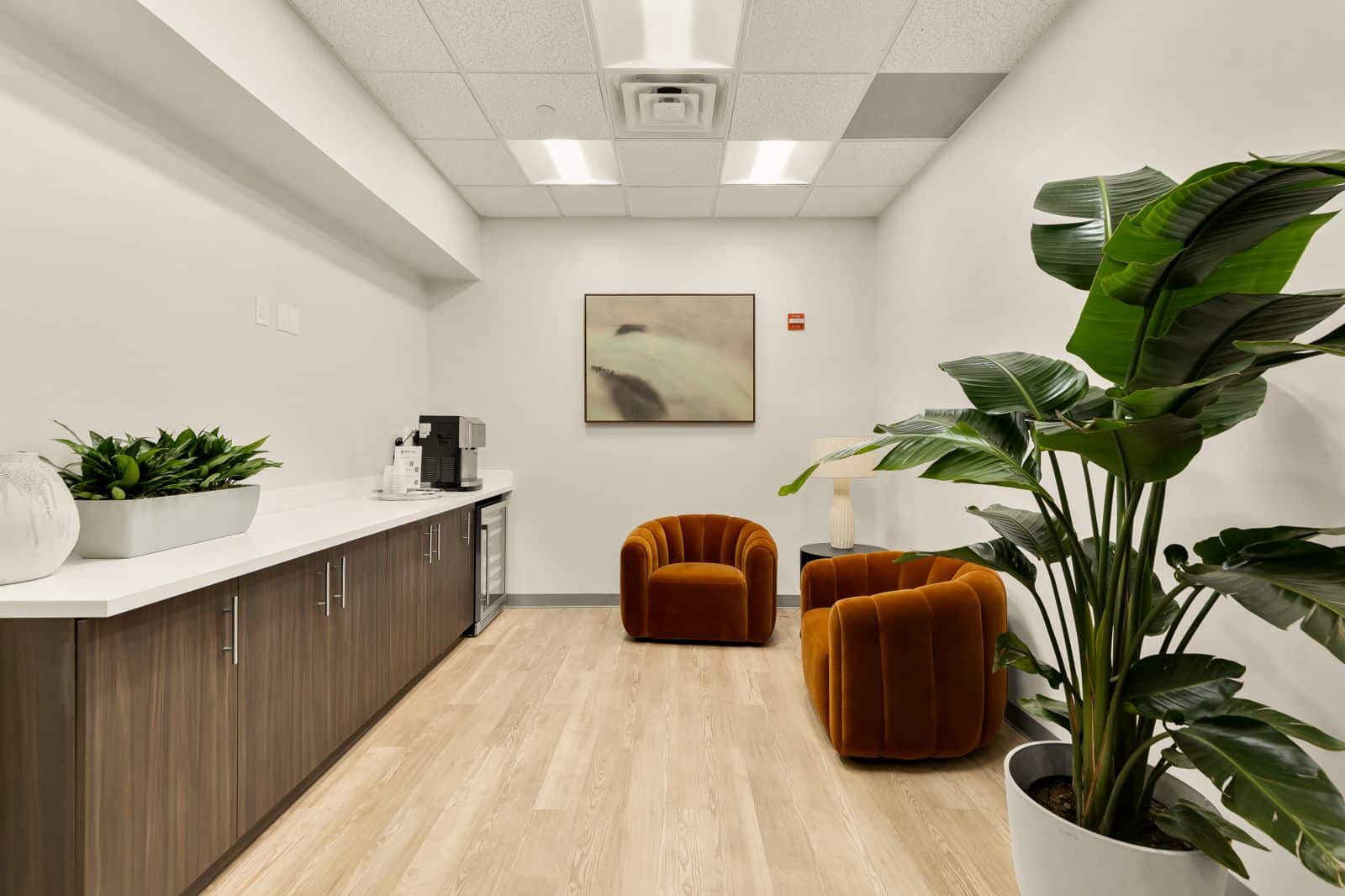
Where you’ll receive TMS




FDA-cleared for depression since 2008 and for OCD since 2018, and included in clinical treatment guidelines for major depressive disorder.
No weight gain, sexual side effects, or gastrointestinal effects typical of many antidepressants. The most common side effects are scalp discomfort and headache, which usually ease over the first sessions.
You’re awake throughout, and you can drive yourself and return to work or school right after. Unlike ECT, TMS does not affect memory.
Sessions are brief. If you need a private room to take calls or join a virtual meeting, let us know and we’ll do our best to accommodate.
TMS may be a good fit if antidepressants haven’t worked, if your depression or OCD has been hard to treat, or if you want a non-medication approach. A rare but serious risk is seizure, which your psychiatrist screens for before treatment.
Many TMS programs operate primarily as procedure clinics. At WIP, TMS is part of a broader plan directed by a board-certified psychiatrist who stays involved throughout your course.
Most people feel a tapping sensation on the scalp. Mild scalp discomfort or headache is common early on and usually eases over the first sessions. No anesthesia is needed.
Standard TMS is typically one session a day, five days a week, for 4 to 6 weeks. Accelerated TMS completes a course in 5 days with 7 to 8 sessions a day.
Daily TMS with Dr. Navin Reddy at WIP-DC is in-network with UnitedHealthcare and Cigna, and our team handles prior authorization. With other plans, TMS is often eligible for out-of-network reimbursement. Accelerated TMS is self-pay.
Usually, yes. TMS is commonly combined with medication. Your psychiatrist will review your medications before you start.
Yes. There is no sedation, so you can drive yourself and return to normal activities right away.
Yes. TMS is FDA-cleared for OCD as well as depression, and your psychiatrist will discuss whether it is appropriate for your symptoms.
TMS is FDA-cleared as an add-on treatment for depression in adolescents 15 and older. See our child and adolescent psychiatry page.
At WIP-DC, 4325 49th Street NW, Suite 200, Washington, DC 20016, and WIP-Rockville, 1801 Rockville Pike, Suite 110, Rockville, MD 20852.
Start with a complimentary consultation at WIP-DC, (202) 525-5123, or WIP-Rockville, (240) 995-6005.